50 Years of Deadly: Holding Truth and Hope Together
As we celebrate 50 Years of Deadly, Safina Stewart shares a reflection on this year's NAIDOC Week theme and invitation to continue walking together in truth, hope and love.

Rev Hazel Davies invites us to step into a different story of youth justice. Read her reflection on moving towards each other now.
Stepping into a new story of youth justice with Rev Hazel Davies.
Australia’s public debate on youth crime is often steeped in fear, punishment, and political point-scoring. It is a story bathed in urgency, outrage, and the illusion that incarceration equals justice.
But what if the Church offered a different story? One that acknowledges accountability and supports victims, but also provides healing and dignity.
A story that refuses to give up on any child.
Hazel Davies - a Reverend in the Anglican Diocese of Canberra, founder of Making Peas/ce Movement, and supporter of the Common Grace movement - lives, breathes, and invites us into that story.
_____________________
Hazel remembers the morning a child nearly threw a metal scooter through her windscreen.
It was a quiet Sunday morning as she was heading into Alice Springs, but she could sense tension in the air.
Out of nowhere, a young Aboriginal boy on a scooter shot out from a side street directly into the path of her car.
Elders from a nearby settlement were in hot pursuit, shaking their fists and yelling.
Hazel slammed on the brakes, just metres from the boy, bracing for the worst.
On her other side, a police paddy wagon with sirens blaring appeared, swerving to block the boy’s progress.
Trapped, the boy ran head long for Hazel’s vehicle - his metal scooter raised with the clear intent of ramming it through her front windscreen
As he reached her car and lifted the scooter, “I looked into his eyes,” Hazel recalls. “It was like looking down a time tunnel of the deepest, deepest recess of pain, anger, trauma, and fear.”
Hazel reversed quickly, watched as two forms of justice converged on this young boy, and thought “how did he get here?”
That child wasn’t born violent. He didn’t wake up one morning and choose crime. Hazel reflects on what the evidence now demonstrates - children who are born into cycles of trauma, poverty, and disconnection can carry the weight of generational trauma in their DNA. Some also suffer from Fetal Alcohol Syndrome Disorder (FASD) or mental illness.
Australia remains one of the few countries in the world where children as young as 10 years old can be arrested, charged, and imprisoned. And it is Aboriginal and Torres Strait Islander children who are disproportionately impacted - First nations young people are 27 times more likely to be in detention than non-indigenous youth.
“Ten-year-olds aren't even at the age of consequence,” Hazel explains. “Some are so affected by trauma or disability that they legally can’t be held responsible. But we incarcerate them anyway…by locking them up, we’re actually generating and condoning future crime. The money is there, they can find it for the courts, the police, the prisons. Why can’t they find it for prevention?”
Hazel believes that the system needs to change.
“We need to go forward to them, not away”
Governments must raise the minimum age of criminal responsibility to at least 14; Invest in prevention - mental health, community programs, housing, and education; Support and fund Elders and local leaders, not just courts and police; and embrace restorative justice programs and models such as the Koori Court, which seek healing over punishment, in culturally appropriate ways.
“I adore them. When I'm out on Country, I've got no off switch for these kids…even though I know they're naughty ...it's not hard to move through quickly to the mother heart…connecting with them and horsing around and kicking a ball and realising there's another way to reach these kids."
The way of peace.
Hazel also remembers a moment in 2018, just after the Todd River flowed - a rare and sacred event in Alice Springs.
The streets buzzed with kids, little mischief-makers she’d seen around town before. That day they were wild with energy, throwing things off the bridge, dancing on the edge of danger and delight.
Hazel got out of her car.
“Big water, big water, boys,” she said.
“Yeah, big water, big water!” they shouted back.
And just like that, something shifted. They stopped the antics and asked her to take a photo with her phone, to capture them playing in the river, rolling in mud, laughing like the world wasn’t broken.
For an hour, Hazel was in it with them - soaked, filthy, fully human.
They gave her a number. She sent the footage to their parents.
“Thank you, missus,” they said, grinning, giving a thumbs up.
That day there were no labels. No threats. No dividing lines. Just muddy feet, laughter, and a glimpse of shalom; peace breaking through.
“Our role is to be ambassadors of Christ…the prince of peace…and that means to be gutsy, to be mediators, to walk into the public arenas and say, "Not on our shift. We don't want this.”
Where others see “offenders,” Hazel sees hurting children as image-bearers of God. Where the system demands toughness, she chooses tenderness. Where headlines condemn, Hazel invites us to “Come forward, move towards one another.”
Her perspective has been forged through decades of working at the invitation of continuing custodians—those who tell of a long corridor of loss and grief from the massacre of their people, removal from Country, and stolen and displaced children, culture, and language,
In a world rushing to punish, Hazel invites us to pause.
To reflect.
And to move towards one another.
Her story challenges the deeply ingrained belief that incarceration equals justice. And instead offers a path laced with healing, courage, and hope.
May we all step into this new story.
___________________________
Find out more about Common Grace’s efforts to reform Australia’s youth justice system, including our calls to raise the minimum age of criminal responsibility, here.
________
This reflection has been written with thanks to Rev Hazel Davies in conversation with Eliza Johnson from the Common Grace team, and offers a snapshot of the wonderful and passionate movement of Common Grace and ways people are pursuing Jesus and justice together across these lands. If you have a story to share of how you or your community have been inspired and taken action with Common Grace, we would love to hear! Please reach out to our team at [email protected]
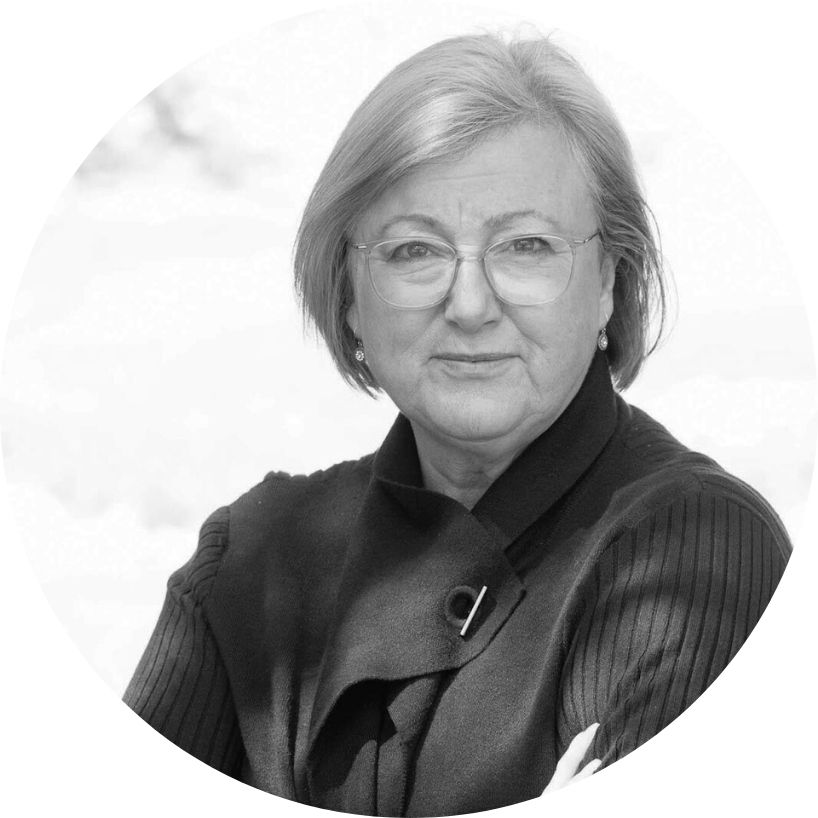
Floral activist Hazel Davies is of British heritage and was born on Dhurrawall land near the site of the first Aboriginal massacres of the colonising period. With 40 years’ experience as a professional floral designer, poet, writer and teacher, Hazel has co-ordinated the professional floristry teaching program at Canberra Institute of Technology (CIT) for 15 years. In 2014 with the strong endoresement and collaboration of traditional custordians, Hazel founded the Making Peasce Movement, to raise the history and profile of the Sturt's Desert Pea as a commemorative flower for the Frontier Wars and massacres. In 2015 Hazel wrote the iconic poem entitled 'The Poppies and the Peas’ which has been listed in the world catalogue of resistance poetry. Hazel is currently a Vocation Deacon in the Anglican Diocese of Canberra.

As we celebrate 50 Years of Deadly, Safina Stewart shares a reflection on this year's NAIDOC Week theme and invitation to continue walking together in truth, hope and love.
Warren and Jessie, members of South Croydon Anglican’s reconciliation group and supporters of the Common Grace movement, share their reflections on marking Aboriginal Sunday with their community.

Rev Hazel Davies invites us to step into a different story of youth justice. Read her reflection on moving towards each other now.

Common Grace National Director, Gershon Nimbalker, reflects on the recent Voice referendum result.