From Harm to Healing: Reimagining Scripture After Violence
Ellaina Welsman, Common Grace’s Domestic and Family Violence Justice Lead, speaks with Dr Rosie Clare Shorter and Dr Erin Hutton about their research on Reading the Bible After Violence.

Ellaina Welsman, Common Grace's Community Engagement Manager, and Domestic and Family Violence Justice Coordinator, reflects on the stories we tell about gender and why they matter.
Every week I wake before the sun, before the house breaks into the morning chaos, and slip out the back door to run with a group of women who have all fallen in love with our weekly run club.
As working mums, we treasure these sacred moments: moving our bodies, sharing space with friends, and claiming time that belongs only to us. And of course, there’s coffee and conversation afterwards.
On one recent run, sitting outside our local cafe, Amy* mentioned that her husband hadn’t been in a good place lately. He’d been trying joining sports, talking with mates, and now searching for a therapist.
Her comment sparked something around the table. A few of the other mums began reflecting on their own partners, and more broadly on how men seem to navigate midlife — that stage where we’re expected, or assume, that we should know who we are or feel we’ve achieved something in particular. The conversation opened up questions about midlife, social isolation, and what seems to be a growing reality for many men in Australia.
We reflected on the men in our own lives — partners, brothers, fathers, and sons. Why did it seem harder for them to talk openly about how they were really going? Why did vulnerability appear to come more naturally to women?
These are broad and gendered observations; human experience is far more complex than simple binaries. Not all men struggle to open up, and not all women share easily.
As I listened, despite my own instinct to remain agreeable, I felt compelled to gently challenge our conversation. The day before, I attended Our Watch’s Primary Prevention training, exploring how the drivers of gender inequality show up in our national epidemic of violence against women.
We may observe gendered patterns, but they are not explained solely by biology or innate traits. Gender is also social. We are shaped by powerful expectations about what it means to be masculine or feminine. We are raised within systems that subtly, and sometimes explicitly, reward certain behaviours and discourage others.
It means we might notice more when our boys engage in creative role play and quietly worry they’re not chasing a ball. We might reassure others, or ourselves, by adding a caveat: he also loves trucks.
Even our best parenting exists within a broader culture consistently reinforcing gender norms. The world for girls and boys, women and men — all of us — sends strong messages about who we should be.
Over time, these messages shape how power is distributed, whose voices carry authority, and whose needs are prioritised. When one gender is granted greater control, autonomy, and decision-making power than another, inequality becomes normalised. It’s in this environment where gendered violence takes root.
In Australia, the consequences are devastating. One in four women has experienced violence by an intimate partner since the age of 15.
Scripture tells us every person is created in God’s image (Genesis 1:27), affirming dignity and worth. God’s vision for relationships is mutuality, justice, and love, not domination. Gender inequality distorts this, damaging relationships and fracturing communities.
Gender equality must begin by recognising how rigid expectations and gendered imbalances of power harm all of us. It's about creating a world where everyone is free from limiting roles. Shifts towards greater equality are happening all around us — but we still have so many gender narratives that keep us all from living safe, free and flourishing relationships.
It asks us to examine the norms that teach men to suppress emotion, prize self-reliance or the ability to provide well, and equate vulnerability with weakness. It also calls us to question the expectations placed on women to carry emotional labour, nurture relationships, and hold communities together.
What if gender equality means raising boys who can name their feelings without shame, supporting men to seek help, and sharing care more equally? What if it means building communities where connection is not gendered, and loneliness is not inevitable?
As we approach International Women’s Day on 8 March, we are invited to reflect not only on women’s achievements, but also on the work still required to build a more just and equal world. It is a moment to recognise that gender equality benefits everyone — and that preventing domestic and family violence begins with transforming the attitudes, norms, and power structures that shape our lives.
That morning, what began as a conversation about one man’s struggle became a window into something much deeper: the ways gender shapes how we live, connect, and cope.
It lives in everyday conversations over coffee. It shows up in who speaks and who stays silent. It shapes who asks for help and who feels they cannot.
And perhaps the work of justice begins in moments exactly like this: when we notice the patterns, ask the hard questions, and imagine something different together — a world marked by dignity, safety, and flourishing for all.
*Name changed.

Ellaina Welsman has been part of Common Grace for over five years and currently serves as Community Engagement Manager and Domestic and Family Violence Justice Coordinator. With more than a decade of experience in the Christian not-for-profit sector, she has led Common Grace’s partnerships, supporter engagement, and fundraising since 2020. Ellaina holds a Master of International Development and a Bachelor of Health (International), bringing a strong background in community development and social justice to her work. She lives on Awabakal Country with her husband and two children.
Ellaina Welsman, Common Grace’s Domestic and Family Violence Justice Lead, speaks with Dr Rosie Clare Shorter and Dr Erin Hutton about their research on Reading the Bible After Violence.

Ellaina Welsman, Common Grace's Community Engagement Manager, and Domestic and Family Violence Justice Coordinator, reflects on the stories we tell about gender and why they matter.
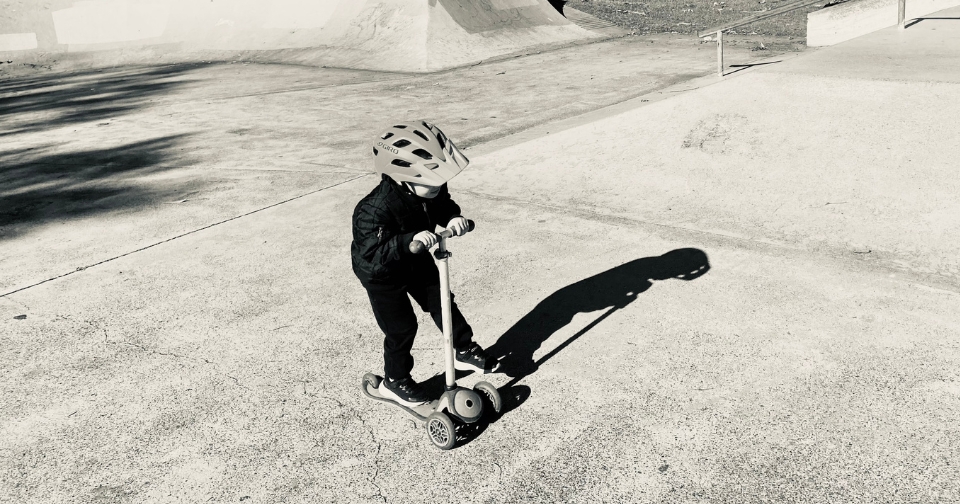
Ellaina Welsman reflects on raising a boy, the church's role to uphold safety, and challenge harmful gender stereotypes.

We are thrilled to announce the appointment of Ellaina Welsman as the new Domestic and Family Violence Justice Coordinator. Ellaina is deeply passionate about seeing churches commit to and make steps towards ending violence against women.